I actually hate carpet, so when I've had the choice, we've lived places with hardwoods or other non-carpet flooring. Carpet is gross; even well-maintained carpet holds an enormous amount of dirt. When we did our first round of renovating on this house, we pulled out the carpet and put in pine board floors and Marmoleum.
Jason felt it would be too cold and bought couple of rugs. The rugs added color, we could clean them, and sitting on the floor seemed more inviting. They also meant I used the vacuum pretty much every time I wanted to clean the floors.
Then we had the fire, and the firemen did not take off their dirty boots when they were looking for our cats in the smoke filled house. They walked across the rugs with an urgency for which I feel only gratitude. The thing about a fireman's boots is they tend to be quite dirty, and as I discovered, it tends to be a type of dirt that just doesn't come out of a rug. So, I looked at that stained rug a couple of years, and I tried turning it this way and that to see if I can hide the stains some.
This fall, I got rid of the rugs, and I switched to using a broom. I like sweeping; it's quiet and kind of soothing. The children are able to talk to me while I sweep and I can hear what's going on around me. The vacuum creates a curtain of sound that's pretty hard to penetrate. I can see what I'm collecting with my broom and whether I really do want it to go in the dust pan. My fantasies of someday being offgrid do not include a vacuum cleaner.
The only problem is the spiders. We have many spiders around our house, and I do not actually mind. However, the cobwebs do bother me. I've swept down cobwebs and swept down cobwebs. Then I noticed that within a day of sweeping them down, there were just as many if not more; the spiders were getting the upper hand. I realized that they had not been such a nuisance before because I probably killed a fair number of them when I vacuumed down the webs. So, I pulled out the vacuum.
It took two hours to vacuum our small house, but the cobwebs are gone, the furniture is vacuumed, the floor vents are clean, as are the insides of the cupboards and the bookshelves. The floor is noticeably cleaner than when I sweep. I think I'll have to work out some rhythm for using the vacuum, like maybe once a month. Between times, I'll use the broom.
Showing posts with label Housekeeping. Show all posts
Showing posts with label Housekeeping. Show all posts
Friday, February 8, 2013


Thursday, January 31, 2013
Tattler Lids
You probably know by now that the regular Ball brand canning lids have BPA in that coating on the underside of the lid. I try to avoid BPA which led me to trying out Tattler lids.
I read reviews and I knew people had a few issues that they felt were resolved by their being more attentive to screwing the lids down just so before the jars went into the canner. I read the instructions carefully. My first batch of canning summer before last showed a surprising failure rate. By this I mean that I owned 24 Tattler lids that were applied to 24 jars of tomatoes or jam and of those 24, I had failed seals or mold within that season in at least 10 of those jars. I attributed this to my perhaps not being careful enough.
So this past summer I gave it another go; I even bought another dozen of these lids at the local coop.
 This is the fifth jar of tomatoes I've found like this:
I found at least four others early in the season with their lids just not sealed that I also threw out.
When you find this in your pantry, you doubt everything in there. I made a point of doing only mixed batches of Tattler and BPA lids. None of the regular metal toxic lids have failed. None. I did 90 quarts of tomatoes, 36 of those were canned with Tattler lids. I was extremely careful about the tightening and not tightening and ring and lid placement. I figure whatever that black mold is, it's probably worse for my family than the BPA in the metal lids.
Don't waste your money on these lids. It's not worth the risk.
I read reviews and I knew people had a few issues that they felt were resolved by their being more attentive to screwing the lids down just so before the jars went into the canner. I read the instructions carefully. My first batch of canning summer before last showed a surprising failure rate. By this I mean that I owned 24 Tattler lids that were applied to 24 jars of tomatoes or jam and of those 24, I had failed seals or mold within that season in at least 10 of those jars. I attributed this to my perhaps not being careful enough.
So this past summer I gave it another go; I even bought another dozen of these lids at the local coop.

I found at least four others early in the season with their lids just not sealed that I also threw out.
When you find this in your pantry, you doubt everything in there. I made a point of doing only mixed batches of Tattler and BPA lids. None of the regular metal toxic lids have failed. None. I did 90 quarts of tomatoes, 36 of those were canned with Tattler lids. I was extremely careful about the tightening and not tightening and ring and lid placement. I figure whatever that black mold is, it's probably worse for my family than the BPA in the metal lids.
Don't waste your money on these lids. It's not worth the risk.
Tuesday, December 18, 2012
"The Cure" by Ginger Andrews
Lying around all day
with some strange new deep blue
weekend funk, I'm not really asleep
when my sister calls
to say she's just hung up
from talking to Aunt Bertha
who is 89 and ill but managing
to take care of Uncle Frank
who is completely bed ridden.
Aunt Bert says
it's snowing here in Arkansas,
on Catfish Lane, and she hasn't been
able to walk out to their mailbox.
She's been suffering
from a bad case of the mulleygrubs.
The cure for the mulleygrubs,
she tells my sister,
is to get up and bake a cake.
If that doesn't do it, put on a red dress.
Tuesday, December 11, 2012
Drying Laundry In December
I hung a load of laundry outside last week just before a thaw. I had dried three other loads in the preceding days without a hitch. But the thaw brought rain.
I thought, "Ah well, a little rain, a little sun, a little more cold dry weather, the clothes will dry." Most likely they've been dry, or mostly dry, in the past week, but with the short days and our driving schedule, I was not home before dark on any of those days.
Then it rained for two days.
Then it froze last night and stayed below freezing all day.

 I brought them in to dry by the fire.
I thought, "Ah well, a little rain, a little sun, a little more cold dry weather, the clothes will dry." Most likely they've been dry, or mostly dry, in the past week, but with the short days and our driving schedule, I was not home before dark on any of those days.
Then it rained for two days.
Then it froze last night and stayed below freezing all day.


Saturday, November 10, 2012
Housekeeping
We did many of the little tasks today that will facilitate other tasks, those detail things that don't exactly inhibit progress, but hang over your shoulder as you're trying to concentrate elsewhere.
First, Jason and I lingered over our coffee and did a crossword puzzle. We like this routine, but we haven't been able to indulge since we started school, either because the table had to cleared for school or because Jason had to hop right into work. The slow start on the day sets a pleasant tone.
Next, we loaded up the things for a run to the dump, Jason pulled the dead battery out of the CRV, and I hung a load of laundry on the line. We let things build up for the dump, and the past two weeks, the trash bags and miscellany have irritated as I waded around them when I entered the garage. I killed the battery in the CRV by once again leaving the lights on for at least 24 hours. And today, we were blessed again with some November sun, so it was a fine day for laundry.
We dealt with all the stuff in the truck, ran an errand for Jason's work, and parked the truck in the barn to keep the supplies in the bed dry. I held a cable while Jason put the new battery into the CRV. I made lunch while Jason ran by his mom's just to check on things. Jason talked to our friend who will help build the cow shed, and he talked to another friend who might take the BMW wheels we've had in the barn for three years. After lunch, we measured off the site for the new cow shed, and then cleaned out the garage.
Like I said, it was all little stuff, but I feel lighter and a little more prepared for winter.
Wednesday, October 24, 2012
Domestic Goddess
I was recently with another woman who has a completely different skill set from me, and I found myself comparing the two of us, and wondering whether I measured up. I like doing comparisons like this, because it helps me remember where I want to be, find a new way to go, or congratulate myself on what I'm doing. It also occasionally makes me feel like a failure.
The funny thing about this particular comparison is that it brought up thoughts I have regarding some of best friends as well. I started thinking that maybe I could only feel truly that I had become a domestic goddess when I regularly did almost everything each of these woman do. The list got pretty hilarious the longer I thought about it, and I encouraged my friends to chime in when they had something to add to the list.
So, here's my list; add your own items in the comment section if you feel I've overlooked something.
- Homeschool.
- Growing at least 50% of the food a family eats.
- A tidy, presentable house at all times.
- A bathroom your mother wouldn't mind using.
- Each child always having a homemade item to don.
- Fresh, matching pajamas at bedtime for the children.
- A well brushed dog.
- A garden that's a delight to walk through.
- Chickens are a must.
- The chicken coop must be pristine- especially the nest boxes.
- The chickens must USE the nest boxes if you're really a domestic goddess.
- A pantry full of home canned and lactofermented goodness.
- Fresh baked something every day.
- Every meal must be a peaceful occasion.
- No sandwiches- unless all sandwich items were lovingly prepared by you.
- Domestic goddesses do not have to own or shear sheep, but from roving to sweater, they must know the way.
- Each family member must have a sweater from your labors.
- Your yard must be beautiful.
- The children's rooms must be inviting.
- Daily mopping.
- Homemade yogurt.
- A happy spouse.
- An empty laundry room due to all the laundry being ever clean and put away.
- A calm answer to every child who ever makes any request.
- Always ready.
Monday, October 8, 2012
Composting toilet
This post has been sitting blank for more than a year; it' the post that made me wonder if I really thought blogging was a thing I wanted to do. I fretted about actually talking about this, because my feelings run strong and I worried about offending people. And then I came back to blogging and this blank draft is sitting in my post list and I think I have to talk about this.
I live in a place that seems (at least to someone from Texas) to have an unlimited amount of water. There's water everywhere. It falls regularly from the skies; the rivers seem to never be dry. Our sandy soil stays saturated for weeks in the spring and the occasional week throughout the summer and fall. So, why would I worry about water?
First, water is limited. Really. It is. There is only so much, and only so much of it is potable. Being from Texas, I know that water does not always fall from the sky when you need it.
Second, we have a spring that we get water from. This means we can actually have NO water if we forget to turn off a garden hose. Truthfully, the spring recovers pretty fast- about 2 hours in high summer- so we have never been without water long. But if you have never experienced the thrill/horror of turning on the tap and no water coming out, then you'll have to believe me that it is a sobering experience. It helps me not take water so much for granted.
Because I was always on city water in Texas, it never really registered. If the water did not come out of the tap, it mean the city had a problem to fix. Can you imagine a robocall telling everyone in Fort Worth there would be no water for two hours?
Third, there's the whole potability thing. Probably everyone who reads this post shits in their drinking water.Then, that water gets "cleaned" and cycled back into the system so you can either drink it or shit in it again. I hope you're a little grossed out at this point.
Coming to this realization, coupled with trying to conserve our spring, led me to try something that seemed completely crazy- much crazier than cloth diapers. I now compost our waste, "humanure" as it's called. While I have you cringing already, you might check to see what your city does with the human waste cleaned from your city's water. Around here, the guy who empties septic tanks sprays that "manure" on hay fields. I'm not sure exactly what regulations apply regarding when that field can be used to feed animals, but I am sure that my compost is sitting much longer and most definitely turning into dirt before it's used agriculturally.
And really, what ARE they supposed to do with all this shit we're dumping down our pipes?
So, as I try to keep at least on foot off the soapbox, I'll say we've been doing this for an entire year as a family. We made it through last winter by building a box with a toilet seat that a five gallon bucket sits in. The bargain I made to get everyone in this house on board is that I switch out the buckets and clean them. It's not such a big deal, except maybe in January. Things I've learned: I need three compost piles to get a family of five through winter; the compost pile compacts faster if I put a little sprinkling of compost on the finished bucket; everyone must be very clear on which bins are aging and which compost bins are active. I had two bins that should have been ready this fall, but the kids added kitchen scraps and cat litter in the spring, so those will wait awhile longer. Pine shavings break down better that cedar.
For now, we still have a flush toilet with a humanure receptacle beside it. Jason insists that people will not visit us otherwise. I'm not convinced, but sometimes, the more squeamish person should set the bar.
Saturday, September 29, 2012
Another Good Use of Electricity

I did what many homesteaders do these days, at least the ones lacking knowledgeable elders, I turned to the internet. These first method I found different from those already listed was to use an upright mixer. Some of you may be wiser or more farsighted or more experienced than I am and you may already know what happened. For those of you lacking these traits that I lack, I will tell you- it was an unholy mess. There was cream on the cupboard doors and cream in the drawers and cream on the stove and cream on the floor and cream on me and really just cream everywhere. To top it off, it took FOREVER to whip into butter, maybe as long as 45 minutes. I went back to the drawing board and pondered the lovely convenience of the tidy sticks of butter one buys at the grocery store.
I decided to try the food processor again with a little phone support from a friend who makes all the butter they use. It is perhaps the very best reason for owning one of these noisy machines. After ten minutes, I had butter floating in butter milk.
I think the reason the food processor did not work when I tried it before had to do with the temperature of the cream. It was in Texas and I did have a toddler and preschooler "helping", and I am not sure the butter did not go too long or that the ten minutes it takes seemed more like 45 with two children under foot.
So, this information is already widely available on the internet, but to keep you from looking further, here's what you do. Allow the cream to separate from the milk; this only works with raw, unhomogenized milk. If your milk has traveled much, it may not separate very well. When you can clearly see the line between the milk and the cream, skim the cream off the top of the jar (this is a bad time to have milk in a jug) and put it into another jar or straight into the food processor. The cream is much easier to skim and make into butter if it is chilled.


So, gently pour off the milk- ideally not down the pipes as it will some day cause you untold sorrow. Run a little cold water into the food processor and pulse the butter. Drain it again. Add the cold water and pulse again. Drain.

Put it into jars that do not have shoulders, seal them up (not canned), and put them into the freezer.

Tuesday, December 7, 2010
Milk Jars
One person we used to get milk from was so persnickety about jars. There were very specific protocols about jar size and shape and cleanliness. She gave instructions on how to clean the jars even. We found this all so tedious, and we were even occasionally blase about all her little rules.
Now, I'm the milk lady. Today for the first time I heard myself being put out that someone wanted milk but did not bring jars. Then, my litany of complaints began playing in my head as I washed the jars that were returned. I just do not think you can fully understand why we milk ladies have all these dumb rules.
For example, if you take milk but do not bring back jars, I am short not the two jars for your gallon of milk, but four jars. We bought two dozen half-gallon jars when we started milking, and we thought we would not require people to pay jars into the pool. But, if we use two to four jars a day for fresh milk, we very quickly run out of jars. When we were the only ones drinking it, the jar juggle was no big deal. We emptied a jar and washed it and filled it the next morning. But our milk customers only see us once a week, so we cannot count on those jars for a week at a time.
Then there is the washing problem. Milk leaves a film of casein on the inside of the jars that is most easily removed with cold water. And when you do this initial cold water rinse, you actually have to be pretty thorough to get all the casein out. It's actually no big deal if people wash their jars by hand, but some people do use dishwashers. The dishwashers are a double whammy. They inevitably cook the casein onto the inside of the jars and they leave a nasty smell in the jars. So, I rewash the jars to get the smell out, and usually have to use baking soda to scrub out the casein film.
Also, our milk people like to do canning and most of them make kim chee. Let me tell you, if you reuse a pickle lid on a jar of milk. the milk will have a dill smell. And if the kim chee jar has not been washed with baking soda, your milk will have a lacto fermented tang.
Perhaps I'm too fussy about smells, but I do not think so. I always noticed when the jars from that other milk lady were not just right. Perhaps you think the little tea stain up near the rim of the jar is insignificant. But imagine yourself standing at the milk refrigerator grabbing the jar of milk. Which one are you going to pick? If you're like me, the pristine jar of sparkling white milk with no smudge in the cream line will be your top pick. And even if you're the person who gave me the tea stained jar, you'll begin to hold my cleanliness in question.
Finally- I have trouble explaining to people why a milk jug is not reusable. The fact is, the container must be a shape that I can convince myself is clean enough that you will not get sick from the milk I put inside it. And, I have an aversion to plastic.
Signed- the Cranky Milk Lady
Thursday, December 2, 2010
Chicken Management
We had Thanksgiving at a friend’s house last week, and this friend knows many interesting people who have skill sets I could only dream of. One of the guests was quite knowledgeable about chickens, and she explained to me that roosters could peck each others’ heads until one died. She expressed surprise when I told her about our two roosters and told me about her brain damaged rooster she is currently nursing.
 So, here’s the rundown on our chicken situation. We have two roosters. One is a lace Wyandotte another friend gave to us because she had too many roosters. He is about one month older than our pullets, but he’s noticeably bigger than the other roosters. He is so beautiful; he is also a good breed to create our own flock of chickens brought up from our own hens. A little genetic variation helps to have a healthier flock, and, as I said, he is so beautiful.
At the time we added him to the layer flock, we had six New Hampshire Red roosters. It’s not that we wanted six or seven roosters. Back in June we ordered a “straight run”; that means we got whichever chickens came along- they were not sexed. We could have ordered all hens or all roosters, and the hatchery would guarantee 80% accuracy. Since the minimum order is 25 chicks, and we did not need 25 hens, we asked for a mix of roosters and hens. We had seven older hens, and the new batch of 26 chicks included eight roosters. The plan had been to kill all the extra roosters. After a couple of accidents- like the fox, cat, neighbor’s dog, and coop attack- we have 17 hens, which easily justifies keeping two roosters.
The top rooster is the Wyandotte and he earned his name the second day he was with the flock. The older hens did not give a fig for him, and the pullets were too young to be of any interest. He is a very flashy black and white with fluffy feathers and a definite strut. He would drop his wings as he moved close to an older hen, then kick a little with one of his feet and do a sashay. I named him Elvis on the spot.
 The one I liked best of the six red roosters had this outlandishly big comb. He had earned my favor by keeping Nico away from the free ranging hens and then by seeking Nico out to play with him. He was definitely the top rooster before Elvis came along. His personality drew my attention, and then his comb made him easy to pick out from the rest of the roosters. He is now named Jerry Lee.
Once he joined the flock, Elvis kept the other roosters away from the older hens. He most particularly chased away Jerry Lee. I figured as the red hens matured, Jerry Lee would claim a few of them for himself, and Elvis could just keep the more mature ladies. That’s not how it played out. As the red hens came of age, Elvis added them to his flock. I wondered if it was just too many roosters, and if the animosity would subside if there were fewer roosters.
So, one day the kids and I culled the extra five roosters.
Things did calm way down in the chicken yard, but Jerry Lee seemed to be even more of an outcast. A few of the red hens shunned Elvis, but they shunned Jerry Lee as well. I had to start putting food out in multiple places so Elvis could not keep these hens and Jerry Lee from the food.
 If you’ve read this far you might be wondering why I did not just kill Elvis, that big meanie. He’s a very good rooster. He calls the hens in, he lets them know if he’s found a delicious tidbit, he never eats before them, he rounds up stragglers when it’s time to roost, he’s very watchful, he doesn’t let then hens pick at each other, and he’s really beautiful.
 And that’s where things stood when I visited with the knowledgeable chicken lady on Thanksgiving Day. As you might imagine, I kept thinking of Jerry Lee’s wondrous comb, and I thought about how I want two coops next year on opposite ends of the property so that the chickens do not get moved around so much. The next morning, Ezra and I segregated Jerry Lee and eight of the hens. We put all four black hens with him, because Elvis did not seem to like the black hens. Then we added the red hens in who seem to fly out of the fence the most often; we figure they must not be too fond of Elvis or they would stay closer to home.
I’m not quite sure how it will work this winter, but I currently plan to alternate which flock gets to roam. That is, I’ll alternate when I feel like the new flock has melded into a flock. For now, everyone is locked up, getting used to this arrangement.
 So, here’s the rundown on our chicken situation. We have two roosters. One is a lace Wyandotte another friend gave to us because she had too many roosters. He is about one month older than our pullets, but he’s noticeably bigger than the other roosters. He is so beautiful; he is also a good breed to create our own flock of chickens brought up from our own hens. A little genetic variation helps to have a healthier flock, and, as I said, he is so beautiful.
At the time we added him to the layer flock, we had six New Hampshire Red roosters. It’s not that we wanted six or seven roosters. Back in June we ordered a “straight run”; that means we got whichever chickens came along- they were not sexed. We could have ordered all hens or all roosters, and the hatchery would guarantee 80% accuracy. Since the minimum order is 25 chicks, and we did not need 25 hens, we asked for a mix of roosters and hens. We had seven older hens, and the new batch of 26 chicks included eight roosters. The plan had been to kill all the extra roosters. After a couple of accidents- like the fox, cat, neighbor’s dog, and coop attack- we have 17 hens, which easily justifies keeping two roosters.
The top rooster is the Wyandotte and he earned his name the second day he was with the flock. The older hens did not give a fig for him, and the pullets were too young to be of any interest. He is a very flashy black and white with fluffy feathers and a definite strut. He would drop his wings as he moved close to an older hen, then kick a little with one of his feet and do a sashay. I named him Elvis on the spot.

Once he joined the flock, Elvis kept the other roosters away from the older hens. He most particularly chased away Jerry Lee. I figured as the red hens matured, Jerry Lee would claim a few of them for himself, and Elvis could just keep the more mature ladies. That’s not how it played out. As the red hens came of age, Elvis added them to his flock. I wondered if it was just too many roosters, and if the animosity would subside if there were fewer roosters.
So, one day the kids and I culled the extra five roosters.
Things did calm way down in the chicken yard, but Jerry Lee seemed to be even more of an outcast. A few of the red hens shunned Elvis, but they shunned Jerry Lee as well. I had to start putting food out in multiple places so Elvis could not keep these hens and Jerry Lee from the food.
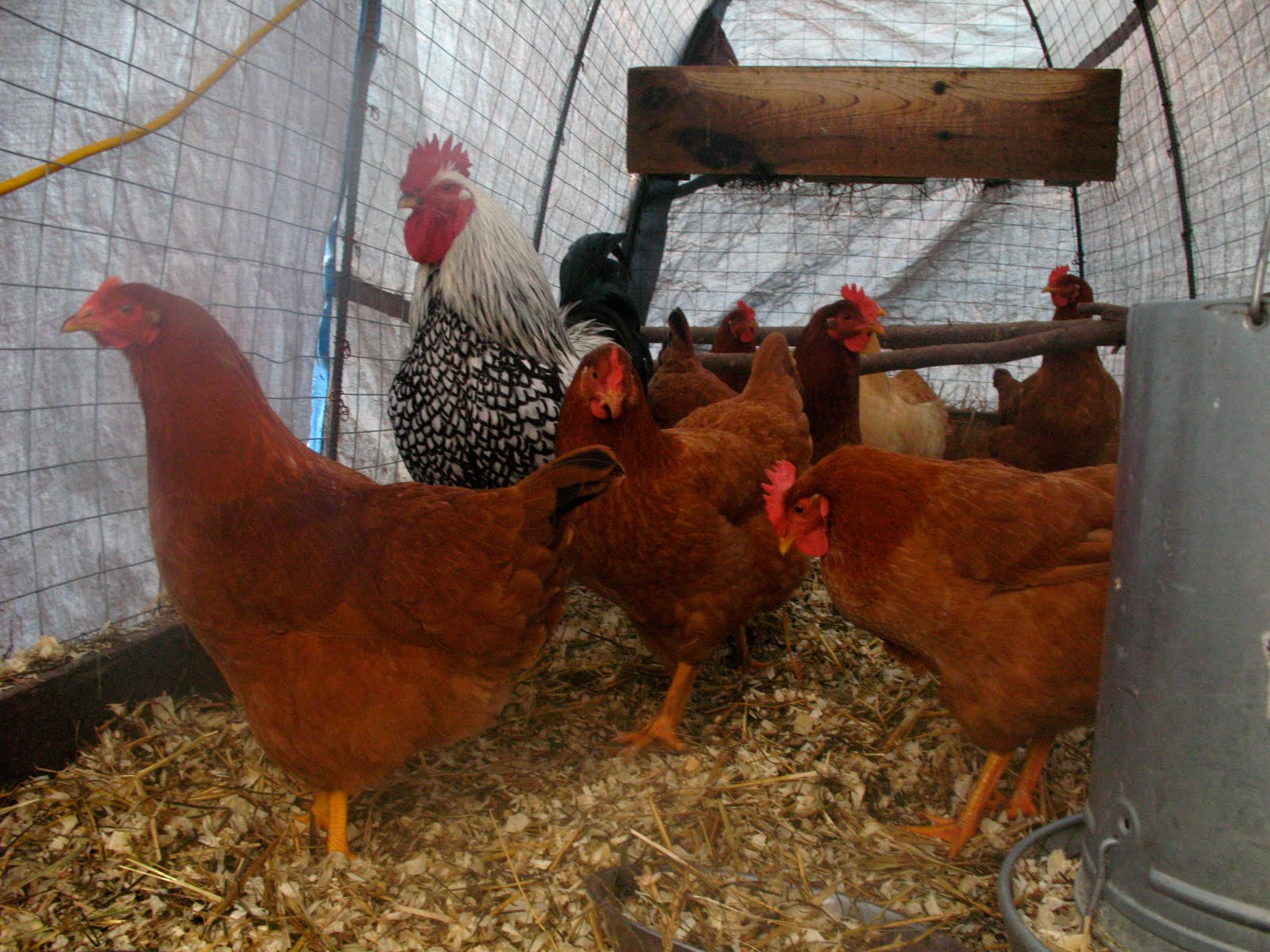

I’m not quite sure how it will work this winter, but I currently plan to alternate which flock gets to roam. That is, I’ll alternate when I feel like the new flock has melded into a flock. For now, everyone is locked up, getting used to this arrangement.
Tuesday, November 30, 2010
Clean Your Room
I have a new insight into this parental struggle. What if we're just wrong about a child's ability to clean a space? I know some children are quite capable of cleaning a space from quite a young age, but I think most of us do not live with such children. And probably most of us were not those sort either.
I have cleaned my children's rooms with them since they were able to crawl, and prior to that, they each rode in a carrier while I cleaned our space. I will admit to my occasional temper tantrums in the face of a recalcitrant child, but mostly, I have modeled just the behavior I wish them to learn. We work as a team, I assigned tasks very specifically according to age and ability, I have made a valiant effort to keep their things to a manageable amount, I have tried to provide a structure that they can use to help them clean, I've played music and games and we've had stories while we tidied. And still, not a one of them can clean a room.
I think even my 10-year-old is unable to apply some internal structure to his space. He does not see the paper on the floor or the heap of stuff on his desk or the sheet wadded up under the blanket on his bed. He will very willingly pick up his laundry or legos; he can arrange books on his shelf. But he still needs a guiding hand to do all the steps to tidy his room, and he just doesn't understand the necessity of dusting (that could be genetic).
My tidiest child thinks that if everything is on a shelf or if the things on the floor are not hers, it is tidy. She does not understand why I want to sweep her floor even when her socks are covered with dirt and wood debris from walking across her floor.
And the littlest is just not sure why I would disturb her play to tidy a space that she can only barely pass through.
I can see they are all learning, but I know I was expected to clean my room by the time I was as old as my littlest. I know many mothers wonder when their children will be able to achieve this task. And I know some will just disagree, but maybe "Clean your room" is not an age appropriate sentence before some time after the age of ten.
Sunday, November 7, 2010
Why Worry
The leaves need raking.
I need leaves for the garden.
I need leaves for the compost.
Violet needs a corner wall in the barn.
The green house needs end walls. And plastic. And probably other things I’m not thinking of.
The chickens still are not laying.
The chickens would lay better with some artificial light.
The chickens are not in a place where we can easily/safely give them light.
There are places that need shingles.
Is the plywood beginning to warp beneath Ezra’s new window?
Nico has dug ten holes in the empty gardens.
The wire to protect the trees is lying in the field, not wrapped around the trees.
Six trees need wire.
The hole in the garden created by the drip from the rain gutter is still a hole.
There is a lot of construction debris around our shabby house making it look shabbier.
Some of the wood is still getting rained on.
Wet wood doesn’t heat that well.
Who can we get log lengths from?
Elmer needs to be brushed.
Sylvie’s nails need trimming. Ezra needs a science lesson. Phaedra needs me to listen to her report on Understood Betsy. Is Jason getting enough time?
And still, I’m glad to be here when I remember to notice where I am.
Tuesday, October 12, 2010
The Unquestioned
I think I'll start a new stream of posts on this topic. If you have read Ishmael, you have at least considered the idea of "mother culture" before; I like to find places where I've just accepted what I've been socialized to accept. Then, I like to look a little more closely and see what is really behind it.
The current one is about hand lotion and sodium laurel sulfate and shampoo.
When I was about eight and visiting my grandmother, who knew everything about keeping house and tending herself, she said, "Well, Sister, your hands need some lotion. Here- put this on and you should do it every day." I slathered on that lotion that smelled exactly like my perfect grandmother, delighting in the smell and the feeling of being like her. The slimy feeling on my hands was kind of gross, but I was a well-behaved child, and I tried really hard to do as she advised. I have used hand lotion pretty miuch daily ever since.
My first shampoo memory involves a green bottle on the side of the tub and then a clear bottle with a picture of Eve draped in flowers. Again, the smells in these two bottles make an even stronger memory than anything else. I also remember my perfect grandmother once saying nothing cleaned hair "these days" like her mother's homemade soap. She said they would wash their hair once a week, then braid it, and that was it until the next hair washing.
The thing I am questioning is the value of these products and if we have really progressed with all our washing and slathering. Someone suggested to me that we have become addicted to sodium laurel sulfate, and if we give our skin some time, we can just use soap on our hair and oil when our skin needs a little help. I have tried before, but I am trying again, as my question to reduce our plastic intake is never-ending, and it is surprising how much of the "new" plastic in our house is from hygiene products.
I have not used shampoo in two weeks, and there were about three really scary days that involved me actually hiding my hair. Then, I used baking soda paste followed by a cider vinegar rinse, and things look pretty awesome. The baking soda comes in a paper box and the vinegar I can either make myself or buy in a glass bottle. Side benefits are that my hair doesn't seem to tangle anymore and it's easier to put up. I figure the hair oils play into this, but I reiterate, my hair looks great, not nasty.
I'm using a homemade hand salve composed of beeswax and olive oil. Again, it took a few days, but my fingers are not split, and the feet I abuse by going barefooted as much as possible seem to have many fewer cracks. I have tried a million things for my feet and my cracked finger tips, so I am pretty amazed with the difference. What I understand is that the ingredients actually dry out our skin and hair so we soak up this little bit of oil but are ultimately more parched.
I'm not really willing to try to convince you, because I can already here the, "No, but my hair..." comments, and it has to be up to you. I'm just saying if you get really tired of bring all that trash into your house and your hands and hair being a mess, you could at least try this. It's a lot cheaper than any other thing I've heard of.
Tuesday, August 17, 2010
Canning
We never canned in Texas. Somehow, it just did not seem the "thing" to do. In Vermont, it's another story. It seems like everyone cans at least one or two things. So, five years ago, we learned how to can, starting with applesauce.
This year, we've canned blueberries in syrup, peaches in syrup, peach jam, strawberry jam, and tomatoes. I'll do some pickles for the first time today, and we're planning to do kim chi or sauerkraut. There are green beans and blueberries in the freezer, and we hope to add corn to that stash.
Still, with all that, I see what others are doing, and I know I have a long way to go. I should have winter squashes to put in the root cellar, but we'll probably have to buy beets and carrots. I DID plant onions, but it did not work out. I'll plant garlic in a few more weeks for next year, but for this year, I'll have to get it elsewhere. We have yummy cucumbers, but not the kind for pickles. I planted peppers, but only hot ones, not thinking about how useful the unloved sweet peppers are in recipes. I already mentioned my cabbage issues...
It's our first year, our first August, of a big garden, and the adage of "You reap what you sow" plays loudly in my mind. I will reap dried beans, sage, thyme, oregano, basil, tomatoes, potatoes, sunflowers, a few beets, very few carrots, tiny cabbages, a little bit of broccoli, pumpkins, butternut squash, tomatillos, crook neck squash, three kinds of hot peppers, and a few Brussels sprouts. That's not too bad for a first attempt.
Thursday, June 24, 2010
Berry Picking time
We went today for a first round of berry picking. After calling around, I found out about an organic pick-your-own in Plainfield called Littlewood Farm. In the past, we picked organic berries at Adam's Berry Farm; we really like Adam's, but it is so far away now that it feels too onerous.
Littlewood Farm was a very nice place to pick berries. The field was well-maintained (as in, we did not have to sort through the weeds to find the berries). The people were friendly, and the spot is lovely. It was also not too busy and was bursting with ripe strawberries. We picked 2.5 flats of berries in about 1.5 hours.
The children were very helpful. Ezra picked 3 quarts to every six I picked, Phaedra picked two to my six, and Sylvie picked 1 quart total. The thing I used to dream about is finally true. I was able to pick berries without stopping every 20 seconds to ride herd on one child or another, and I did not have to pick all the berries myself. Sylvie picked slowly, sampling as she went, and talked to all the other pickers. I kept thinking about Dudley Pippin, and I wondered what all she was telling about our family. Phaedra announced,"Sylvie is making friends again!", and then Phaedra jumped Sylvie's train. Sylvie would start talking, and then Phaedra would chime in. I worried that they were bothering people, but they seemed to share the wealth of their conversation evenly, and no one seemed bothered. Most even seemed a little charmed. Ezra focused on picking in a very bird-like way. He would pick three berries on one row, then wander two rows over and pick five, then move down twenty feet and pick one more. It was very aggravating to watch, so I quit looking, and he was obviously picking plenty fast.
Toward the end, Ezra regaled us with poetry. It started when Phaedra and I were trying to remember "Custard the Dragon", and Ezra began to help us. We did pretty well. Then, Ezra launched into "One Winter Night in August" and "Isabel". It was a delight to have poetry recited as we picked.
Then, Jason and I capped berries tonight. We'll do one more round of picking, because I owe a few jars of jam. So, once we've all the berries, we'll make jam. Then we can sing, "If you want the best Jam, you got to make your own."
Friday, June 11, 2010
Bread
I have baked bread off and on since I was in Mrs. Warner's Texas history class in seventh grade. That first time, my mother did most of the stirring and measuring, and I mostly learned that bread was hard to handle. The recipe we made that time was for yeast rolls like my great- grandmother used to make, then my grandmother, and now my aunt. If you're lucky and you happen by her house around one occasion or another, you might get to have one of those rolls straight from the oven, dripping butter.
When Jason and I moved to Fort Worth, I looked at Molly Katzen's drawings and description and thought for sure I could make bread. I have perhaps too much faith in what one can learn from books. I tried and I tried to make bread like she said, but the twenty to thirty minutes of kneading it on the counter as she recommended never turned out anything worth sharing with friends. And there was also the unintended lesson about how to explode Pyrex bakeware. Then, around that time, one friend got a bread machine that made better bread than I could and another began making sourdough that put my bricks to shame, so I put away Molly and the Tassajara cookbook someone had given me.
Sometime after I started staying home, I again tried my hand at bread. I had a bit more luck, but I still don't think I quite had it figured out. One day, when I was in a hurry, I did not knead it long and I left it in the bowl to knead it. First of all, you can have MUCH wetter dough if you are not trying to knead it on the counter. Additionally, whole wheat soaks up water in the first rise, so it is MUCH better for it to be pretty wet during the first rise. Finally, twenty minutes of kneading is WAY too much kneading; you can not knead at all and still have yummy bread.
The most recent innovation for me has been a switch to making sourdough, which I feared for so many years. I discovered sourdough is more reliable than yeast packets and easy enough to tend if you're making bread for five people.
 So these days, I make bread one to three times a week. I mix my starter with extra flour and water in the evening. I leave it sitting on the counter overnight. There is no magic temperature, although I do cover it to keep cats and debris out of it.
 Then, I separate some of the starter and stick it back in the cool box. I add the rest of my ingredients to what's left. To make two loaves of bread, I use four cups of the overnight glop, 7 cups of flour, 1 tablespoon of salt, some maple syrup, 4 tablespoons of butter, and roughly two cups of water.
 I let it rise until after lunch, then divide it and put it in buttered loaf pans. If it's warm, the bread is ready for the oven by 3:00; if it's cold, I stick it in the oven closer to 5:00. I slash the tops of the loaves and put them in the oven before I turn it on to 350. They bake about 40 minutes, and then we have bread!
 If you're as awesome as I am, you grind your own flour at least once in awhile so that your whole wheat doesn't have that off taste, and so you can make your own layered sand looking flour container.
And last but not least, I have yet to taste 100% whole wheat bread that was worth a bit of butter. Don't be too pure or "right"; use some white flour.
When Jason and I moved to Fort Worth, I looked at Molly Katzen's drawings and description and thought for sure I could make bread. I have perhaps too much faith in what one can learn from books. I tried and I tried to make bread like she said, but the twenty to thirty minutes of kneading it on the counter as she recommended never turned out anything worth sharing with friends. And there was also the unintended lesson about how to explode Pyrex bakeware. Then, around that time, one friend got a bread machine that made better bread than I could and another began making sourdough that put my bricks to shame, so I put away Molly and the Tassajara cookbook someone had given me.
Sometime after I started staying home, I again tried my hand at bread. I had a bit more luck, but I still don't think I quite had it figured out. One day, when I was in a hurry, I did not knead it long and I left it in the bowl to knead it. First of all, you can have MUCH wetter dough if you are not trying to knead it on the counter. Additionally, whole wheat soaks up water in the first rise, so it is MUCH better for it to be pretty wet during the first rise. Finally, twenty minutes of kneading is WAY too much kneading; you can not knead at all and still have yummy bread.
The most recent innovation for me has been a switch to making sourdough, which I feared for so many years. I discovered sourdough is more reliable than yeast packets and easy enough to tend if you're making bread for five people.


And last but not least, I have yet to taste 100% whole wheat bread that was worth a bit of butter. Don't be too pure or "right"; use some white flour.
Tuesday, April 27, 2010
In Praise of the Clothesline
I have been able to hang clothes outside since late March. It is a wonderful thing. The clothes seem cleaner and smell better after they dry on the line. The time I spend outside hanging the clothes, even if I have to wear gloves, is quiet and my own. I love the weather awareness the laundry line gives me; I know, for example, our prevailing wind is different from the "norm" around here. I think there's something about being tucked close to Buffalo Mountain the must give the wind a quick twist. We DO get northern breezes, but our wind is primarily out of the south and southwest. I know how humid it is by how many loads I can dry in a day- my record on this line is 4.
 Also, the laundry on the line means winter is mostly over or hasn't quite settled in.

Saturday, April 3, 2010
The Kitchen
The kitchen does not come first if there's daylight and enough dishes to make it through this meal.
That's the new rule at our house in honor of the warm weather. It's kind of amazing to be as uptight as I am about cleaning, and how it just has not happened in the past couple of days. I do what has to be done to get outside or that is time sensitive. For example, I have been washing laundry very deliberately while the weather has been so nice so that everyone has a fresh, sun dried bed and the rugs are clean and the towels are all fresh- smelling. Also, while I had my five hours to myself this morning, I cleaned the floors; that job is SO much easier when I am the only one home.
Besides the floors, I met with the man who delivered our hoop house. It's laying in pieces in the chicken field just begging for us to put it together. We sorted through the mobile storage unit, taking pictures of everything that was too damaged by the fire that we would like our home owners policy to cover. And, we took the children to a friend's house for an Easter egg hunt. And then it was dark.
As I type this, I wonder why the dishes did not get done earlier, but they really did not. There just was not time to do that inside task on this beautiful, strangely warm spring day.
Monday, March 29, 2010
A bit of Excitement
On Saturday, we had chicken broth simmering on the woodstove. I often leave it there for hours at a time once I've brought it to boiling on the regular stovetop.
The children were in bed and Jason and I were playing a game with some friends who were spending the night when there was a sudden exploding sound and clang from the living room. We jumped up to see just what it was and in our mad dash, Jason slipped in the chicken broth that now covered the wall, hearth, stove, and floor. The pot for some reason had developed a seal and pressure built leading to a chicken broth volcano of sorts.
Jason was fine. The stove was cleaned and fine. The wall looks none the worse for wear. But we did laugh ourselves silly.
The other news is our newest addition- Nicodemus! Pictures to come...
Wednesday, February 3, 2010
The "go to" cake
I like to bake, but I really do not like the children's help in the kitchen. I sometimes think it's because I'm not much of a baker, so I get easily overwhelmed by all the little hands. It could be that when we're baking, I hear "Mama!" an extra 300 times in that day. Perhaps it's the fact that not one of the children notices when someone else is talking, so they all feel completely comfortable talking over one another. Whatever the reason, I find it most pleasant to bake when the children are all already in bed, when I've already been working for 13 hours, when I really ought to be getting ready for bed, when the kitchen is already clean, and when I'm already dog tired.
Naturally, I do not do much adventurous baking at that point in the day. That's when it's time to bake Grandmother Barclay's lemon pound cake with the slight modification implemented by Jason. It turns out great every time, even if my eyes are crossing as I mix it up. Add a little blueberry syrup, and you've got a fancy dessert. Toss it on a saucer beside some coffee, and you have a treat for a friend who drops by. You can substitute 1 cup of cocoa powder for one of the cups of flour, add a little cinnamon and leave out the lemon, and you have an awesome chocolate pound cake. You can make two loaves or a large bundt cake. It freezes well, so you can have a loaf on hand for a sudden potluck invitation. It really is quite a versatile little cake. Enjoy!
3 C flour
1/4 tsp salt
1/4 tsp baking soda
3 C sugar (plus some to sugar the pan)
1 C butter (plus some to butter the pan)
1 T lemon juice
6 eggs, separated
1 C buttermilk (or soured milk)
Preheat oven to 325. Mix flour, salt, and soda. In another bowl, cream together butter and sugar. Add egg yolks and lemon juice to butter mixture. Add milk and flour, alternating, to butter mixture. Beat egg whites to stiff peaks and fold into mixture. Pour into prepared pan and bake for 60 to 80 minutes, or until done.
Subscribe to:
Posts (Atom)